Dark Money -
The Hidden History of the Billionaires Behind the Rise of the Radical Right
|
Monday, 13 June 2016
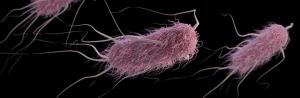
quote [ By feeding strings of human-written data into colonies of bacteria, scientists have discovered a way to turn tiny cells into living, squirming hard drives.
A team of Harvard scientists led by geneticists Seth Shipman and Jeff Nivala has just developed a fascinating way to write chunks information into the genetic code of living, growing bacterial cells. It could be the code for a computer program or the lines of a poem. Either way, these living memory sticks can pass this data onto their descendants, and scientists can later read that data by genotyping the bacteria. ]
|
Comments
 |
midden said @ 8:01pm GMT on 13th Jun
[Score:1 Good]
Seems like a great way to smuggle information, or to insure longevity. Encode all of wikipedia into algae, and set it free in the oceans for later species to discover long after any physical artifacts of humanity are gone.
|
|
HoZay said @ 10:23pm GMT on 13th Jun
[Score:1 Insightful]
Maybe somebody already did that, and we haven't bothered to try to read the algae.
|
|
arrowhen said @ 1:01am GMT on 14th Jun
It was a dyslexic alien named GACT just writing his name over and over.
|
|
midden said @ 4:41am GMT on 14th Jun
I've read various science fiction stories based on this. Makes me think of the Tyrell Corp serial number on every scale of Zhorah's snake.
|
|
robotroadkill said @ 12:38am GMT on 14th Jun
There will be some degradation over time through mutations, and with the short generation time of bacteria, it'll be even more.
|
|
midden said @ 4:36am GMT on 14th Jun
Sure, there will be some degradation, but from what I have read, DNA is a far more robust way to store information across millions of years than any archival method yet devised by humans. Perhaps the Voyager golden records will outlast it, but I'm talking about in a terrestrial environment. The error correction is mind blowingly good. For instance, the protein coding sequences of mice and humans are between 85% and 99% identical after about 220 million years of speciation. Granted, a lot of errors in those genes will just kill the host organism, where as a few letter transpositions in the wikipedia article on green sand casting probably won't.
|
Post a comment
[note: if you are replying to a specific comment,
then click the reply link on that comment instead]You must be logged in to comment on posts.


.